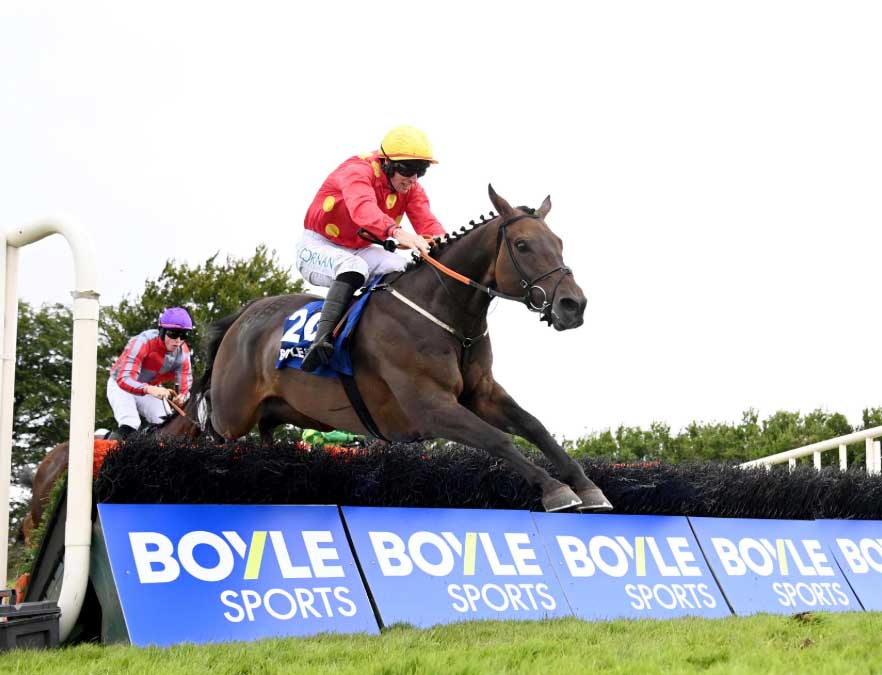


As the Cheltenham Festival draws into view, racing enters that familiar period when anticipation sharpens, and the season finally feels as though it is building towards something definitive.
With The Festival now looming and the final pieces of the Cheltenham jigsaw beginning to fall into place, it serves as a reminder that when racing concentrates its best horses into one event, the sport becomes impossible to ignore. The Dublin Racing Festival, staged for the ninth time earlier this month, has reached the point where its success is no longer in question. What began as an experiment has become a cornerstone of the National Hunt season, delivering elite racing, strong crowds and a clear sense of occasion, despite this year’s disruption.
By contrast, British racing owns some of the most valuable sporting windows of the year around Christmas yet continues to treat them as a sequence of strong but disconnected races. The contrast between the two approaches is becoming harder to ignore. Cheltenham’s enduring success shows that fans respond most strongly when the calendar builds towards a clear focal point rather than a scatter of highlights.
The DRF did not succeed by inventing anything new. It succeeded by concentrating importance. Ireland took races that already mattered, grouped them and presented them as a single moment. The result has been stronger fields, sharper focus and a festival identity that now feels established rather than experimental. It is the same principle that underpins Cheltenham itself: four days where the sport stops competing with itself and instead tells one coherent story. British racing already has the raw material to do something similar at Christmas.
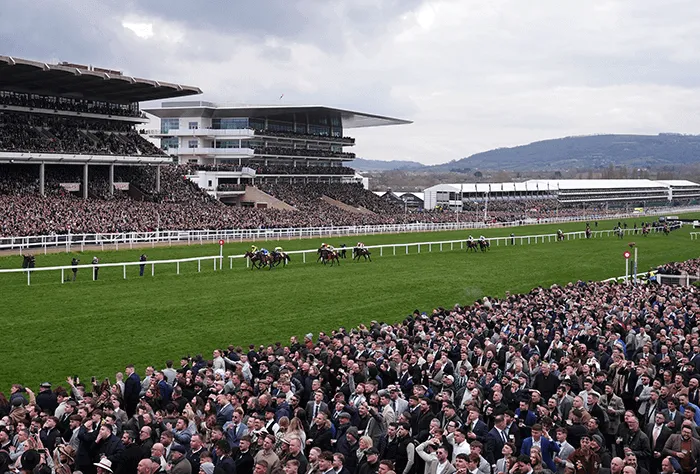
There is already a concentration of quality racing around Christmas, with six Grade 1 race staged within five days of 25th December. If the sport were to focus on the 26th and 27th December, a Christmas Championships could be created along a clear North-South axis, with a meeting in each region across the two days. It would, of course, require discussion between the courses to agree who stages what – but the possibility of Kempton’s closure has already opened up this opportunity.
Creating commensurate Christmas Championships North and Christmas Championships South events, that could be sold and marketed as such, would give the meetings national importance while amplifying regional identity.
That framework would also allow for a North v South racegoer attendance contest, with the winning side being the team that had the most two-day attendees, which would not only increase attendance but also boost engagement. Framing the Championships as a two-day battle for North v South bragging rights, underpinned by a prize incentive for racegoers who attended both days of the winning side, would materially change how fans engage with the two days. It is realistic to assume the South would prevail in Year One, given population density and its status as a more established fixture at Christmas, but that need not be terminal. Formats can be adjusted over time through weighting or incentives, or, if one really wanted to test the industry’s appetite for disruption, even the relocation of the King George to Aintree, which would certainly set the cat among the pigeons.
One notable aspect of the DRF is its pricing. Two-day tickets this year were priced at €75, approximately £65, and the value proposition has received widespread praise, especially at a time when the Cheltenham Festival faces increasing criticism over costs. The DRF also showcased its cross-border appeal, with about a third of attendees travelling from Britain, amounting to around 6,000 British racegoers. For a Christmas Championship to be successful, a similar effort will be necessary to ensure that price acts as a facilitator rather than a barrier, particularly for those being asked to commit to two days instead of one.
This discussion also brings into focus a more fundamental question about responsibility. The current chair of the British Horseracing Authority, Lord Charles Allen, has been clear in public comments that he wants the organisation to become a more commercial entity. Yet while the BHA has some very capable executives, notably Richard Wayman as COO and Tom Byrne as Head of Racing, there is no obvious executive role with clear accountability for originating and driving industry-wide initiatives of this nature.
In the absence of that leadership, innovation is left to individual racecourses and the hope that they will collaborate voluntarily, something British racing has historically failed to deliver consistently. While the BHA continues to grapple with the slow, unresolved process of board realignment, there may be a simpler and more immediate step available. Strengthening executive commercial leadership through the appointment of a Head of Commercial would at least ensure that opportunities such as this are actively explored rather than left to chance.
If the creation of the Dublin Racing Festival has demonstrated anything, it is that concentration, when executed with intent, materially strengthens a calendar rather than distorts it. A Christmas Championship would not be an act of invention so much as an overdue act of re-organisation. British racing does not lack quality, heritage or audience interest at Christmas. What it lacks is a mechanism to turn those assets into a stronger consumer proposition. The risk is no longer in trying something new, but in continuing to leave one of the sport’s most valuable windows to operate on autopilot, while others show what is possible with clarity of purpose and leadership. Cheltenham proves every year that the sport thrives when it gathers its best into one defining moment. The question is whether British racing is prepared to apply that same clarity of purpose beyond March.
Tom Savill is a Director of Plumpton Racecourse